Coldwater Rumble 100 miler
Caution: Children at Play
I was pacing a friend during their 100-miler when we entered the final aid station before the finish line. As we came into the State Park parking lot, there was a yellow sign that read: “Caution: Children at Play.”
I laughed because it felt fitting — as ultra runners, we’re really just living out our inner child as adults. When else can you stay up all night, eat junk food, run and play outside, all while hanging out with friends?
My runner may not have appreciated the analogy in that moment, but it stayed with me as I completed my most recent 100-miler.
Coldwater Rumble 100
I had this race on my mind for some time after it was heavily advertised at Javelina Jundred. At the time, running another 100-miler just three months later didn’t feel like an option.
But as a training run for a race I have coming up in March, it started to seem like a great idea.
It sounded even better when I actually signed up in July. Pittsburgh Decembers are usually mild, and this would be a great opportunity to get some desert miles in. I had also considered this race in the past.
But the weather had other plans.
Instead of mild conditions, this December turned out to be one of the snowiest we’ve had in a while. My long runs were repeatedly canceled — running in a -17° wind chill didn’t seem like effective preparation for the desert.
So my training became… unstructured.
More of a “I feel good, I’ll just run longer” approach.
I also ran 40 miles in August and felt that gave me a solid base heading into this January race.
I knew what the desert brings:
cold mornings and nights, hot days, sun exposure, and sandy trails.
But most importantly — I love the desert.
The scenery motivates me.
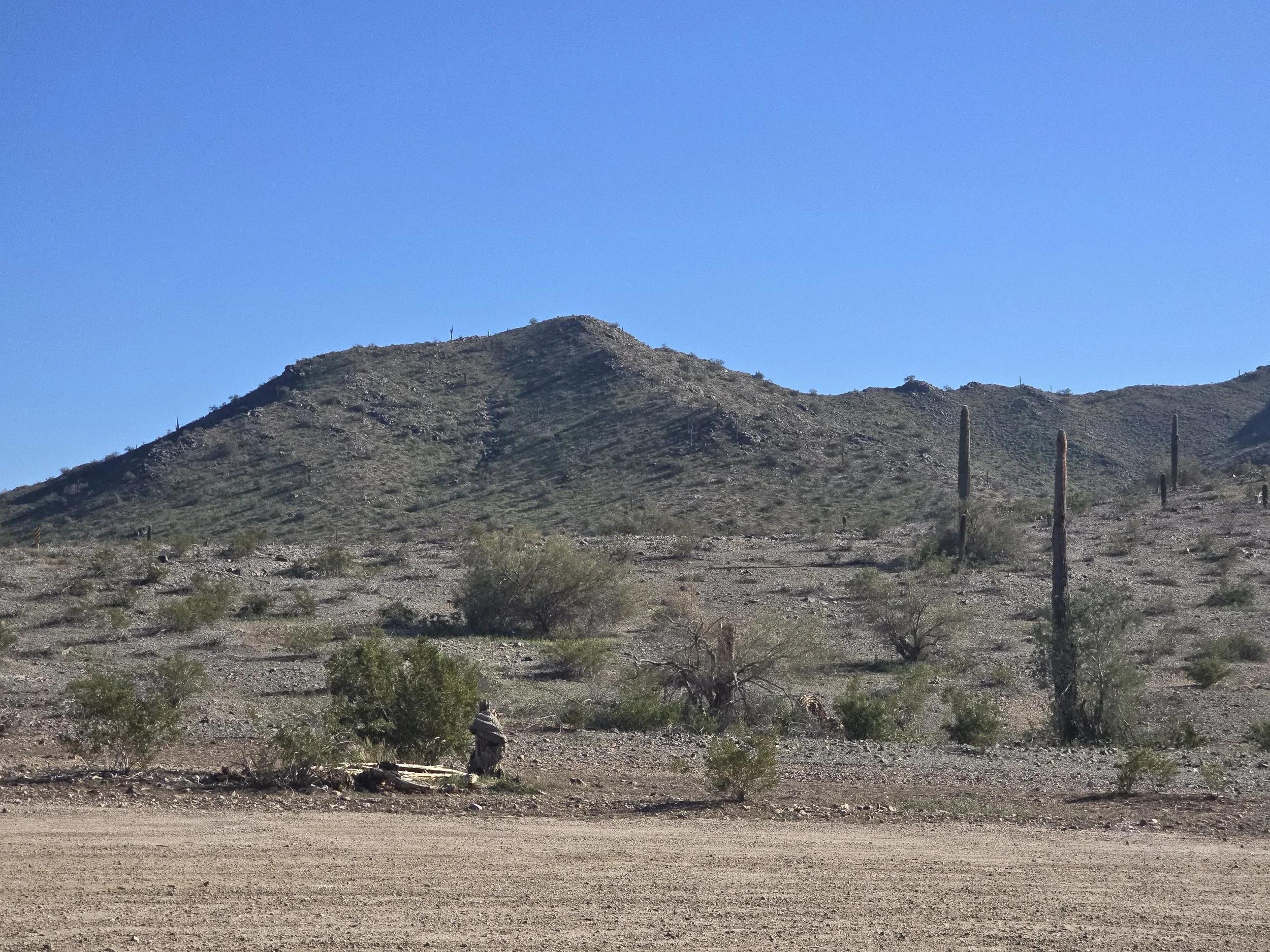
Estrella Park did not disappoint. Mountains flanked the trails, framing beautiful sunrises and sunsets, with Phoenix glowing in the distance. The pre-dawn sky turned a stunning shade of purple.
Going Solo
Another hurdle: I was doing this race solo.
I had run Black Canyon 100K solo before, which helped my confidence. Coldwater Rumble was also a looped course — unlike Black Canyon’s point-to-point layout with river crossings.
Coldwater Rumble consisted of:
A 10-mile loop (run twice)
A 27-mile loop (run three times)
I connected with the race director beforehand and got permission to use my Jeep at the start/finish aid station. That helped immensely with gear logistics.
However, aid stations were 8 miles apart.
I could only place one drop bag on the course — at Horse Thief, the final aid station on the 27-mile loop. This meant once I left my Jeep, I’d go roughly 20 miles before accessing my drop bag again.
I carefully staged headlamps and essentials to prepare.
The Race Begins
The race began in darkness as the sun slowly rose over the mountains.
The first few miles felt manageable, though rocky. The first aid station came at mile 3, and I felt good.
But soon after leaving, the course revealed its true nature — rocks. Endless rocks.
Then came wind, rolling hills, and a steep descent before crossing an access road that climbed back over the mountain to the start.
We had to do this twice.
On the second lap, I found my rhythm and began adjusting to the heat of the day.
Then I fell.
I’ve fallen before, but this early in the race? That hits differently.
My right hand and left leg were bleeding, and my left hand was already swelling.
Still — it was just blood. And technically, I didn’t need my left hand to run.
The Long Loops
After cleaning up at the start/finish, I headed out for the first 27-mile loop.
I misjudged the distance to the next aid station — thinking it was close.
It wasn’t.
It was 8 miles.
I had water, but the stretch felt endless. Finally, I spotted the oasis of a white tent perched on a hill.
Relief.
From there:
2 miles to the next aid
8 miles to the next
8 miles back to start/finish
The 2-mile stretch was deep sand — the infamous sand people had warned me about. It reminded me why some called this race “Javelina’s twin.”
Snow training back home unexpectedly helped here.
The terrain shifted between sand, rock, and stunning valley views.
Eventually, I reached Horse Thief, grabbed my headlamp, and began the runnable stretch back — before the inevitable rocky climb over the mountain again.
Night in the Desert
My second 27-mile loop was entirely in darkness.
Desert nights are deceptive — pockets of warmth mixed with sudden cold.
I started with a light jacket but eventually felt the chill. Near Horse Thief, I heard coyotes howling in the distance.
Fatigue set in.
I battled the urge to lie down and sleep on the trail — but it was too cold to stop.
Back at the Jeep, I promised myself:
Long sleeve shirt
Extra headlamp
5-minute nap
I spent 30 minutes warming up and resting.
I checked encouraging texts from friends back home — messages that felt like conversations at each aid station.
The Final Loop
I left knowing I was safely within cutoffs and determined to finish.
As the sun rose, I felt re-energized.
I moved efficiently through the first 2 aid stations, knowing the hardest 16 miles still lay ahead.
The sun brought welcome warmth, but the rocks had become painfully monotonous.
I passed runners resting in slivers of shade.
I felt surprisingly good:
Not hungry
Not thirsty
Adjusted to the heat
But the blisters on my feet from the relentless rocks slowed me down.
At the final aid station, civilization felt strangely close after more than 24 hours in the desert.
I left with a small group of runners and pacers.
When I began jogging, one pacer gently said:
“You’ll get there just fine at this pace. There’s no rush.”
He was right.
So I slowed down — and connected.
We shared stories, laughter, and the quiet understanding of what brings people to these races.
A band of misfits drawn to endurance and adventure.
The final 8 miles passed quickly in good company.
Finish Line
After crossing back over the mountain one last time, I saw the finish.
Tents. Cars. People.
Relief.
I sat in a chair for about 15 minutes afterward, feeling:
Joy
Exhaustion
And mild concern about staying awake long enough to drive back to my Airbnb.
Vulnerability
As I reflected on this race, I realized I couldn’t write about it without acknowledging vulnerability.
As a psychologist, I share my running stories not to inspire physical fitness — but mental resilience.
When I told clients about this race, they weren’t amazed by the distance.
They were struck by how openly I spoke about vulnerability.
Because that’s what makes these races possible.
Not fearlessness.
But willingness.
Going solo tested that deeply.
I had to rely on myself — and on the kindness of strangers on the trail.
I wasn’t just navigating terrain — I was navigating fatigue, doubt, isolation, and exposure over 31 hours.
In the end, I didn’t just finish a race.
I learned more about who I am.